Archives
- 2026-10
- 2026-09
- 2026-08
- 2026-07
- 2026-06
- 2026-05
- 2026-04
- 2026-03
- 2026-02
- 2026-01
- 2025-12
- 2025-11
- 2025-10
- 2025-09
- 2025-03
- 2025-02
- 2025-01
- 2024-12
- 2024-11
- 2024-10
- 2024-09
- 2024-08
- 2024-07
- 2024-06
- 2024-05
- 2024-04
- 2024-03
- 2024-02
- 2024-01
- 2023-12
- 2023-11
- 2023-10
- 2023-09
- 2023-08
- 2023-07
- 2023-06
- 2023-05
- 2023-04
- 2023-03
- 2023-02
- 2023-01
- 2022-12
- 2022-11
- 2022-10
- 2022-09
- 2022-08
- 2022-07
- 2022-06
- 2022-05
- 2022-04
- 2022-03
- 2022-02
- 2022-01
-
Cut proteins have five evolutionarily conserved
2022-06-07
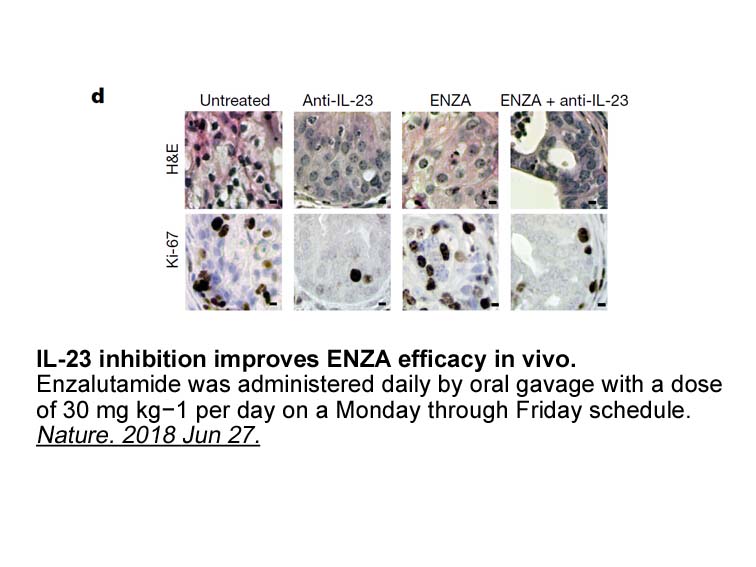
Cut proteins have five evolutionarily conserved domains. These include a homeodomain, three Cut repeats, and a coiled coil structure. The cut repeats, called CR1, CR2, and CR3, are composed of 70 amino acids, and, along with the homeodomain, are each capable of binding DNA. Mammalian cut proteins fu
-
casein kinase The HCV Ag immunoassay has
2022-06-07
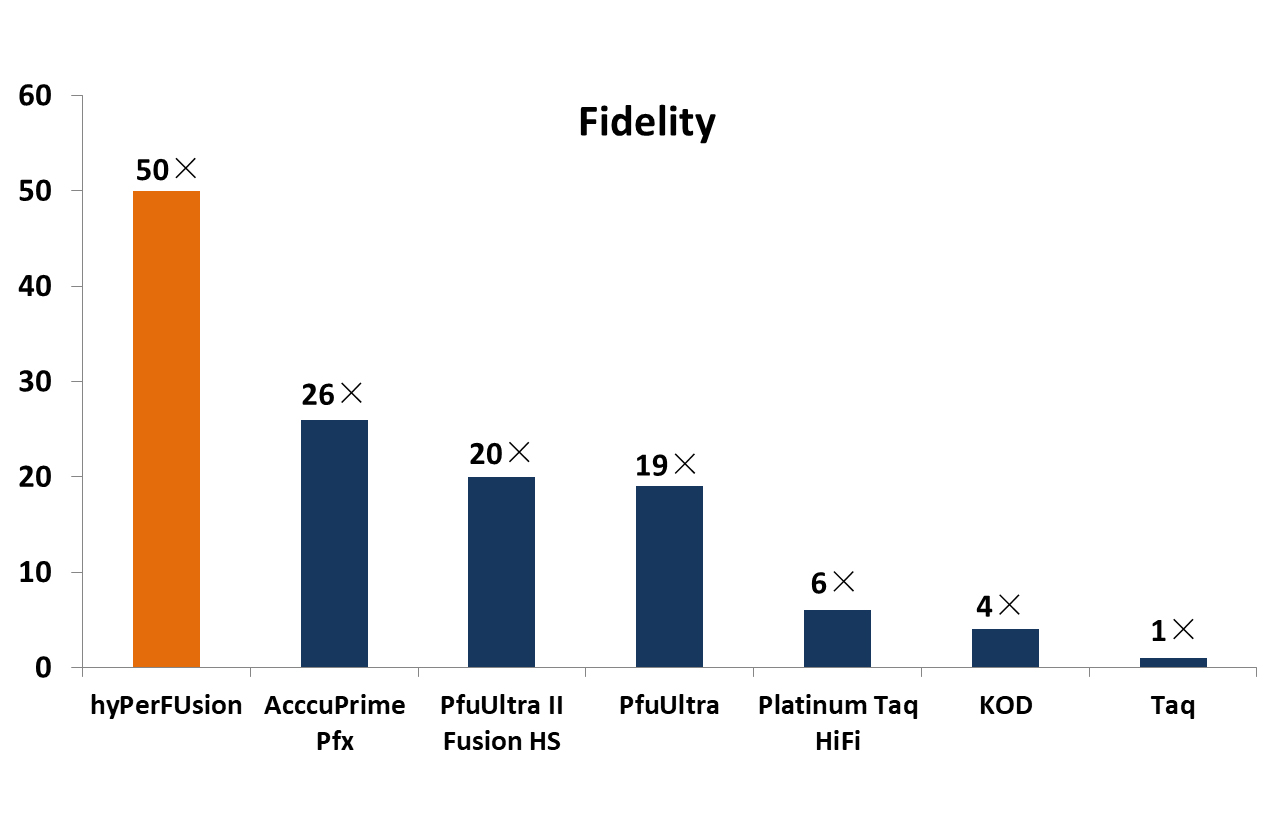
The HCV-Ag immunoassay has been shown from previous studies to be an adequate alternative to the two-stage diagnostic process [6], [9], [16]. Kesli et al. reported a high correlation coefficient of 0.864 when comparing HCV core antigen levels with HCV RNA levels (detected using Qiagen HCV RNA test;
-
G protein coupled receptor kinases GRKs are another group of
2022-06-07
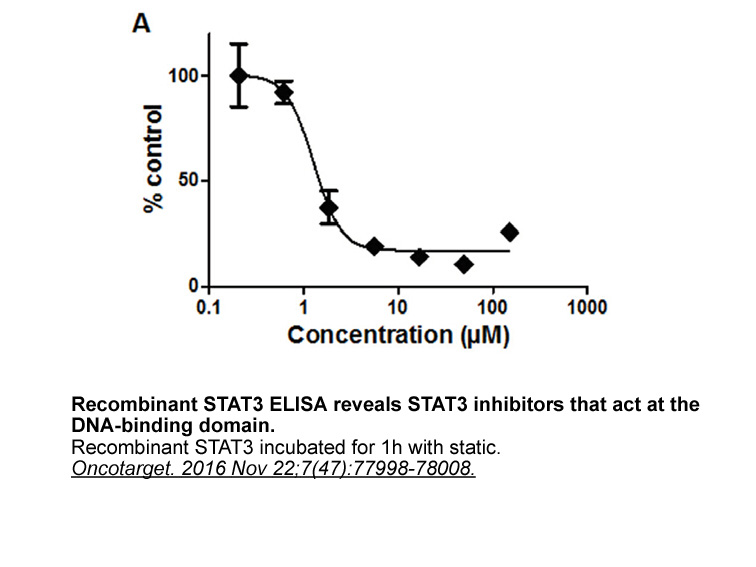
G protein-coupled receptor kinases (GRKs) are another group of kinases whose limited substrate repertoire is associated with an extensive binding interface. GRKs phosphorylate activated G protein-coupled receptors (GPCRs) at multiple sites, promoting binding of arrestin proteins to mediate receptor
-
Introduction In the s nitric oxide NO was
2022-06-07
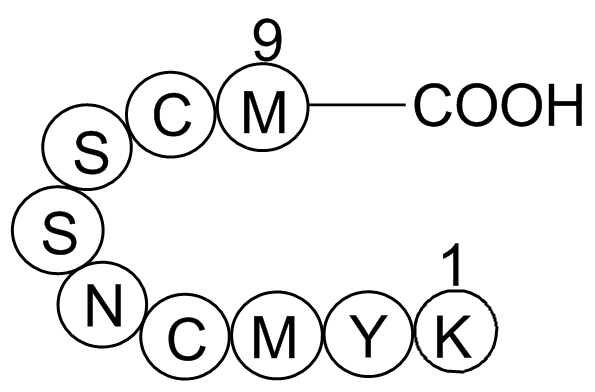
Introduction In the 1980s, nitric oxide (NO) was first characterized as critical to both innate immunity and endogenous signaling in animals [[1], [2], [3], [4], [5]]. NO was the first gaseous signaling molecule synthesized by animals to have its biochemical signaling pathway fully described [2]. P
-
PDEs block GUCY C associated second messenger signaling by
2022-06-07
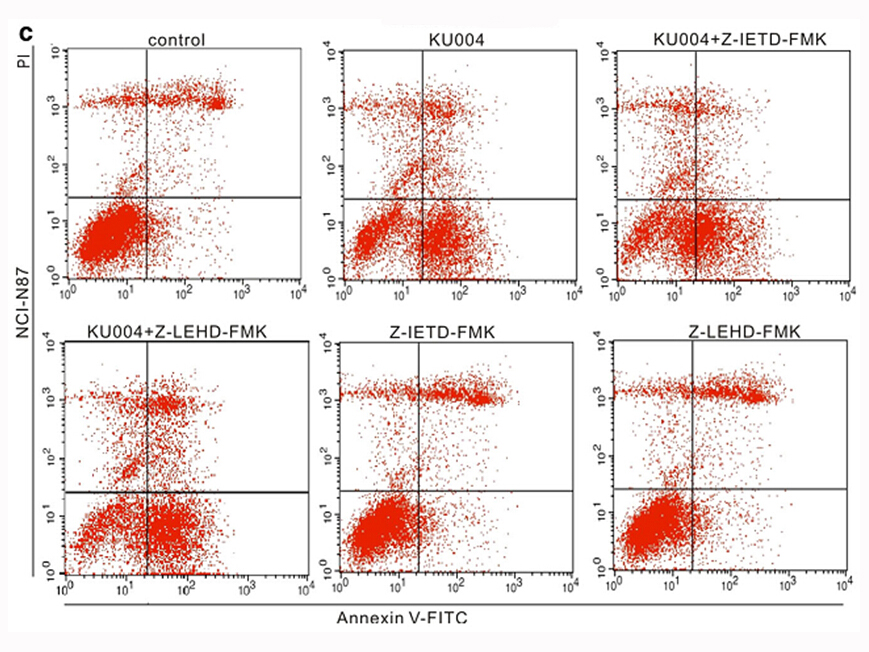
PDEs block GUCY2C-associated second messenger signaling by degrading cyclic nucleotides, whereas inhibition of PDEs activity prevents cyclic nucleotide degradation (Fig. 1). Several researchers have described the pathophysiological roles of various PDEs in numerous tumor cell types, including CRC is
-
br AUTHOR CONTRIBUTIONS br ACKNOWLEDGMENTS br Introduction C
2022-06-07
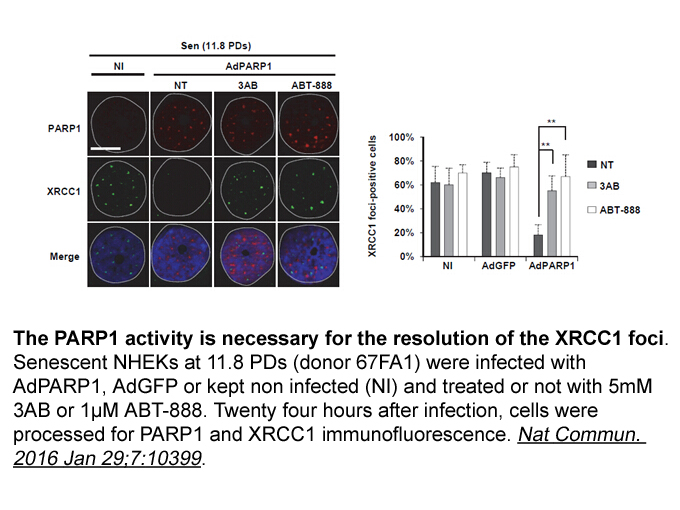
AUTHOR CONTRIBUTIONS ACKNOWLEDGMENTS Introduction Chronic neuropathic pain is a common symptom in patients with human immunodeficiency virus (HIV)-1 infection. Glycoprotein 120 (gp120) is an HIV-1 protein that can cause pain behaviors in animal models (Hao, 2013, Nasirinezhad et al., 2015,
-
br Materials and methods br Results br Discussion The
2022-06-06
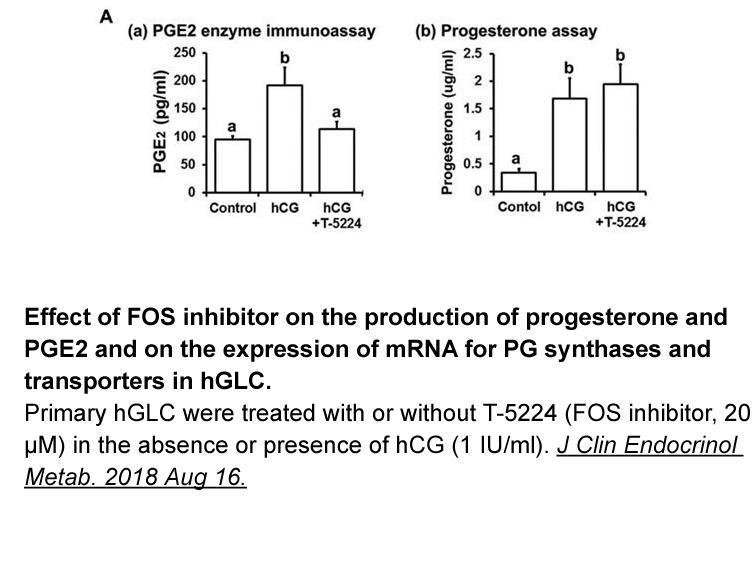
Materials and methods Results Discussion The GO system is an important mechanism for maintaining the integrity of genetic material in many eukaryotic organisms. This is demonstrated by the high conservation, across different evolutionary lineages, of the sequences of the proteins that compo
-
The differentially expressed proteins during somatic embryog
2022-06-06
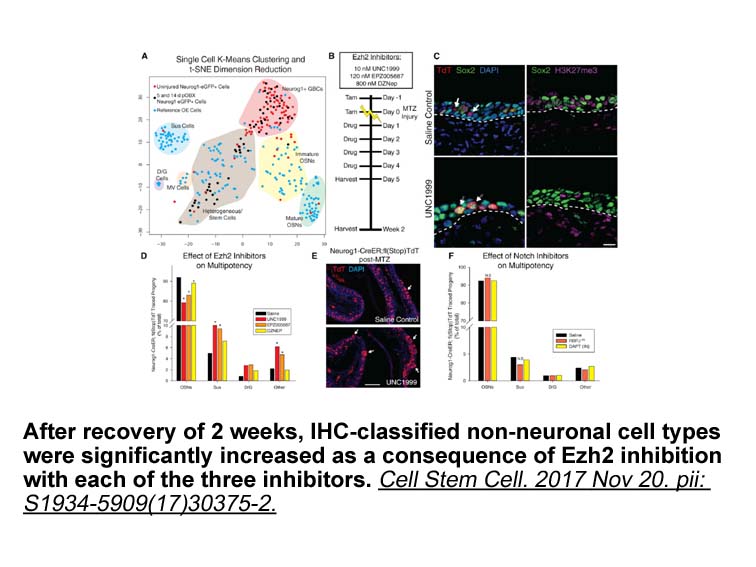
The differentially expressed proteins during somatic embryogenesis are described as the proteins that are induced by oxidative stress and respond to higher cell division activity including ascorbate peroxidase, dehydroascorbate reductase, glutathione transferase and mitochondrial manganese superoxid
-
After ischemia expression of transcription
2022-06-06
After ischemia, expression of transcription factors, including products of immediate early genes, stress proteins and neurotrophic factors are also altered in CA1 neurons78, 79. These proteins are potential candidates for downregulating of GluR2 expression by reducing mRNA transcription or stability
-
GK also called hexokinase IV or D
2022-06-06
GK, also called hexokinase IV or D, is a glycolytic enzyme that converts pka inhibitor to glucose-6-phosphate. GK has unique characteristics compared with those of the ubiquitously expressed hexokinase isoforms I–III, and is predominantly expressed in the pancreas and liver. In pancreatic β-cells,
-
The molecular nature of these
2022-06-06
The molecular nature of these putative Ca2+ ache inhibitor is at present unknown. Apart from the NSVDC channel, which is permeable to Ca2+ [27], [15] functional Ca2+ channels have been identified in patch clamp experiments [28]. These channels, which were characterized as B-channels, seem to have v
-
Interestingly GAL has also been shown to
2022-06-06

Interestingly, GAL has also been shown to be co-expressed and/or secreted in luteinizing hormone releasing hormone (LHRH) (Merchenthaler et al., 1991, Marks et al., 1994) and kisspeptin (KISS) neurons (Porteous et al., 2011). Furthermore, GAL was shown to stimulate luteinizing hormone (LH) secretion
-
The stability of the i motif at the
2022-06-06
The stability of the i-motif at the neutral pH has been analyzed in our previous paper [31] by tracking the rmsd changes in unbiased calculations. Fig. 7 presents, just to confirm the conclusions drawn in [12], the changes in distances between atoms forming hydrogen bonds within the i-motif structur
-
After initial optimization of the distances we
2022-06-06
After initial optimization of the distances we obtained the structure iG shown schematically in Fig. 1. This is the telomeric fragment of chromosome with the noncanonical structures of i-motif and G-quadruplex placed symmetrically in the middle of the duplex. Obviously, we consider the situation whe
-
AZD1152-HQPA In the current study we report
2022-06-06
In the current study, we report the properties of P. anserina mutants carrying mutations in a gene encoding the bi-functional enzyme 6-phosphofructo-2-kinase/fructose-2,6-bisphosphatase (PFK-2/FBPase-2). This enzyme catalyzes two opposite reactions (Pilkis et al., 1995, Rider et al., 2004): synthesi
8530 records 481/569 page Previous Next First page 上5页 481482483484485 下5页 Last page