Archives
- 2026-09
- 2026-08
- 2026-07
- 2026-06
- 2026-05
- 2026-04
- 2026-03
- 2026-02
- 2026-01
- 2025-12
- 2025-11
- 2025-10
- 2025-09
- 2025-03
- 2025-02
- 2025-01
- 2024-12
- 2024-11
- 2024-10
- 2024-09
- 2024-08
- 2024-07
- 2024-06
- 2024-05
- 2024-04
- 2024-03
- 2024-02
- 2024-01
- 2023-12
- 2023-11
- 2023-10
- 2023-09
- 2023-08
- 2023-07
- 2023-06
- 2023-05
- 2023-04
- 2023-03
- 2023-02
- 2023-01
- 2022-12
- 2022-11
- 2022-10
- 2022-09
- 2022-08
- 2022-07
- 2022-06
- 2022-05
- 2022-04
- 2022-03
- 2022-02
- 2022-01
-
Second the phosphorylation events e
2024-12-11
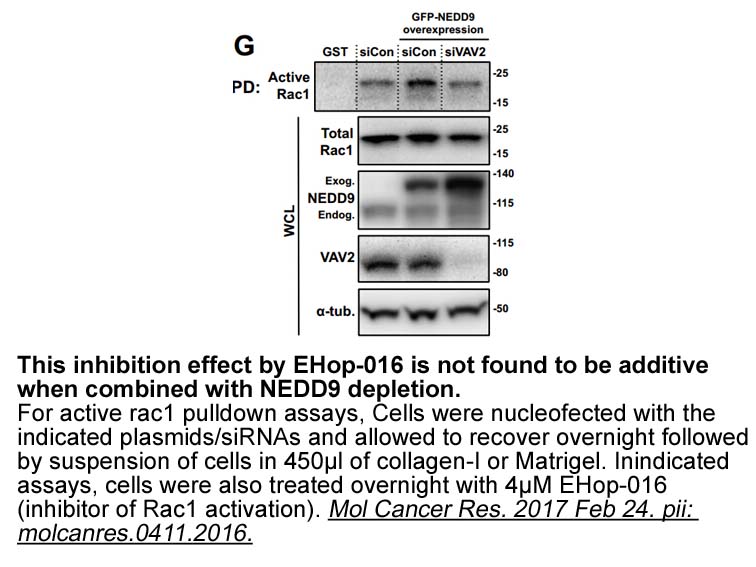
Second, the phosphorylation events (e.g., α-Thr172 and β-Ser108) needed for AMPK activation by small molecules binding at the ADaM or other sites remains unclear. Within the β-GBD, phosphorylation of β1-Ser108 was shown to be required for the activation by small molecules binding in the ADaM site, s
-
Despite extensive studies on the
2024-12-11
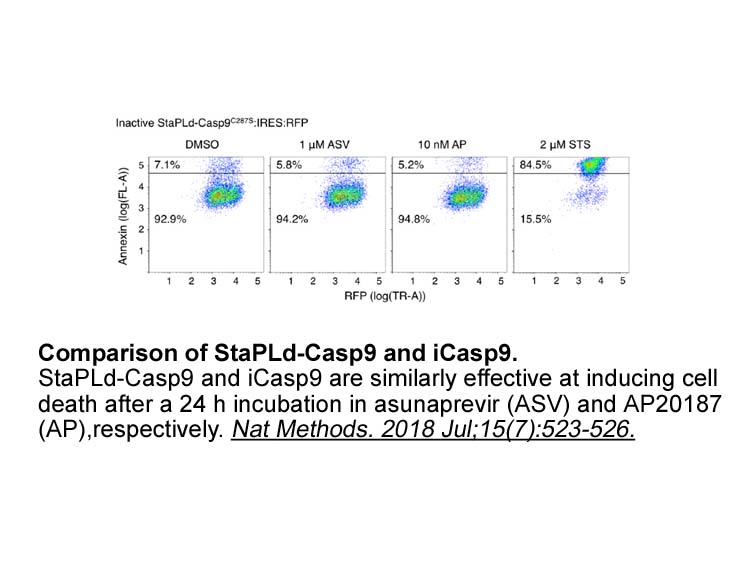
Despite extensive studies on the expression of T. pallidum-induced pro-inflammatory cytokines, very little is known about T. pallidum-mediated intracellular signaling pathway activation, that leads to cytokine expression in macrophages. A network of signaling molecules, transcription factors, epigen
-
Medium spiny neurons MSNs in the striatum start
2024-12-11

Medium spiny neurons (MSNs) in the striatum start from a deeply hyperpolarized resting membrane potential, slowly depolarize and show a delayed start of firing during a current injection (Kawaguchi, 1993, Nisenbaum and Wilson, 1995, Planert et al., 2013). The firing pattern during the current inject
-
AdK as an important upstream
2024-12-10

AdK as an important upstream regulator of adenosine-based homeostasis represents a promising drug target since it leads to an increase in adenosine concentrations. Taking into account that the adenosine formation is only increased in affected tissues under stress with high adenosine levels, AdK inhi
-
leukotriene receptor antagonists br Roles for GMF in Endocyt
2024-12-10
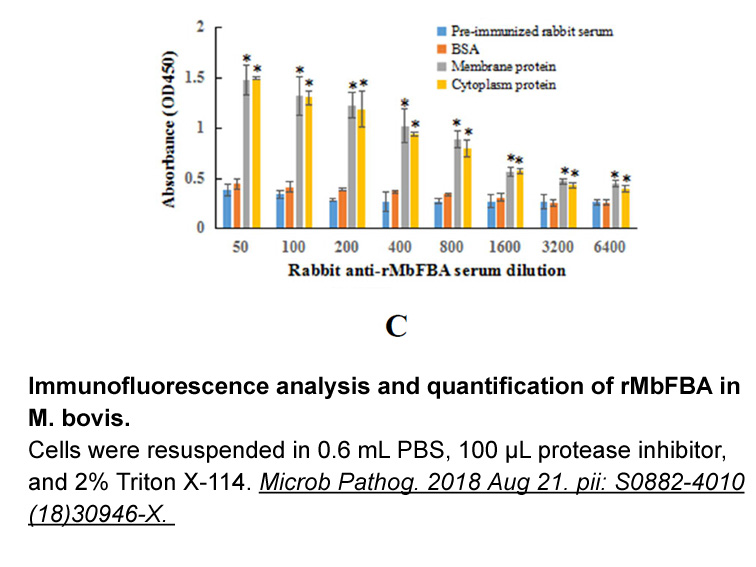
Roles for GMF in Endocytic Traffic In addition to its roles in cell migration, GMF regulates actin-dependent endocytosis in yeast and mammals 13, 14, 50, and promotes the turnover of focal adhesions in immune leukotriene receptor antagonists 42, 51. Vinculin, a central component of focal adhesio
-
Genetic observations from these studies
2024-12-10
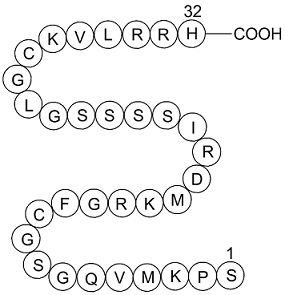
Genetic observations from these studies suggest that GMF regulates Arp2/3 complex and MG 149 dynamics in vivo13, 14. Budding yeast Gmf1 localizes to cortical actin patches, sites of endocytosis assembled by Arp2/3 13, 14. Furthermore, deletion of GMF1 exacerbates the growth defects of a cof1-22 muta
-
A review has recently been published
2024-12-10
A review has recently been published to evaluate the potential effects of food, alcohol and Broad-spectrum metalloproteinase inhibitor juices on the pharmacokinetics and pharmacodynamics of the drugs for BPH. The authors reviewed the PubMed database during the years 1991–2015. In addition, a digita
-
In an AP scenario several inflammatory mediators are produce
2024-12-10
In an AP scenario, several inflammatory mediators are produced locally to orchestrate an immune response. Eicosanoids are among those molecules and represent a class of lipid mediators synthesized from arachidonic CNQX through the action of cyclooxygenases or lipoxygenases to generate prostaglandin
-
Chronic inflammation is associated with both initiation and
2024-12-10
Chronic inflammation is associated with both initiation and progression of many neoplastic conditions [149], and ATX may be a player in the process. ATX/LPA signaling is positively correlated with the invasive and metastatic potential of several cancers including melanoma, breast cancer, ovarian can
-
LPA binds to six specific cell surface GPCR receptors
2024-12-10
LPA binds to six specific cell surface GPCR receptors. The receptors LPA1 (lysophosphatidic receptor 1, formerly, Edg2), LPA2 (Edg4) and LPA3 (Edg7) belong to the endothelial differentiation gene family (EDG) and share sequence homology (50–60% amino ZD 7288 homology) An et al., 1997, An et al., 199
-
The relative stereochemistry of both the
2024-12-10
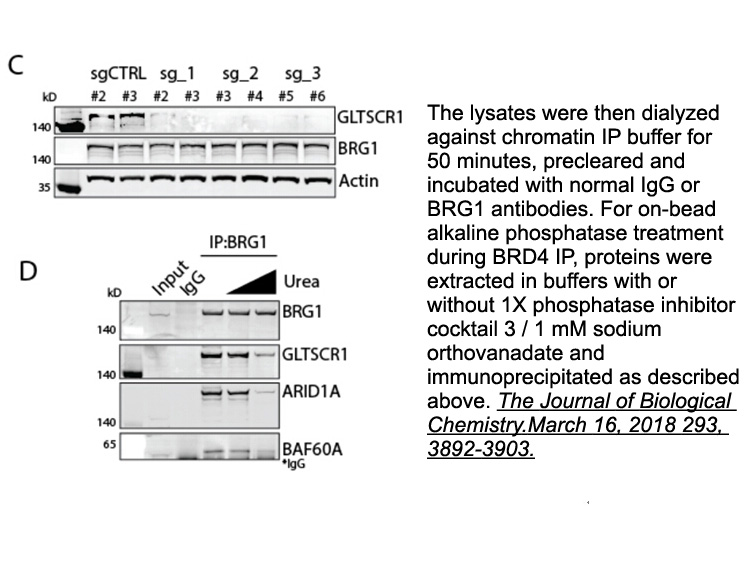
The relative stereochemistry of both the major and minor diastereoisomer of (±)-2-(hydroxymethyl)blebbistatin (±)- (and thus (±)-2-(allyloxymethyl)blebbistatin (±)-) was determined with 1D-NOESY experiments (), as crystallization efforts failed. These experiments revealed an interaction between H an
-
Introduction the DNA damage response important implications
2024-12-10
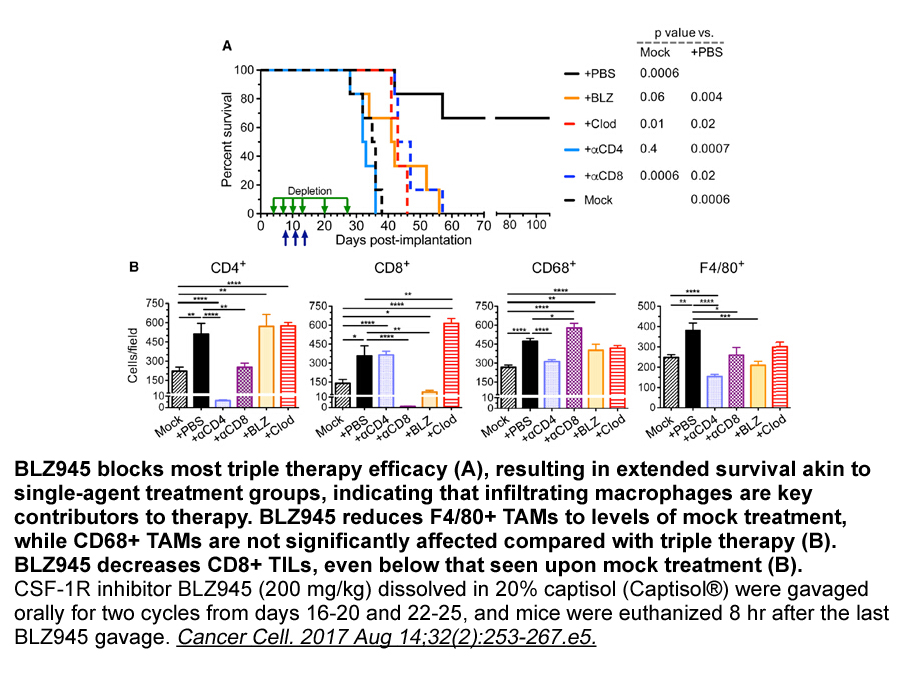
Introduction: the DNA damage response — important implications for tumour development and treatment Cells are invariably challenged by tens of thousands of lesions inflicted on their DNA everyday (Lindhal, 1993). This DNA damage can be caused exogenously by exposure to different types of radiation
-
Our research is the first to report
2024-12-10
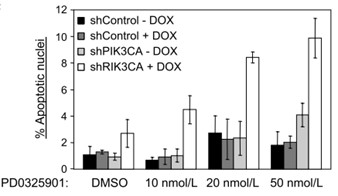
Our research is the first to report that administration of HMW-HA is an effective strategy to defend against PM2.5-induced disruption of pulmonary epithelial barrier and lung injury, and addresses that HMW-HA restricts PM2.5-induced epithelial apoptosis through reducing oxidative stress and followin
-
The use of FTAI can overcome the negative impact of
2024-12-10
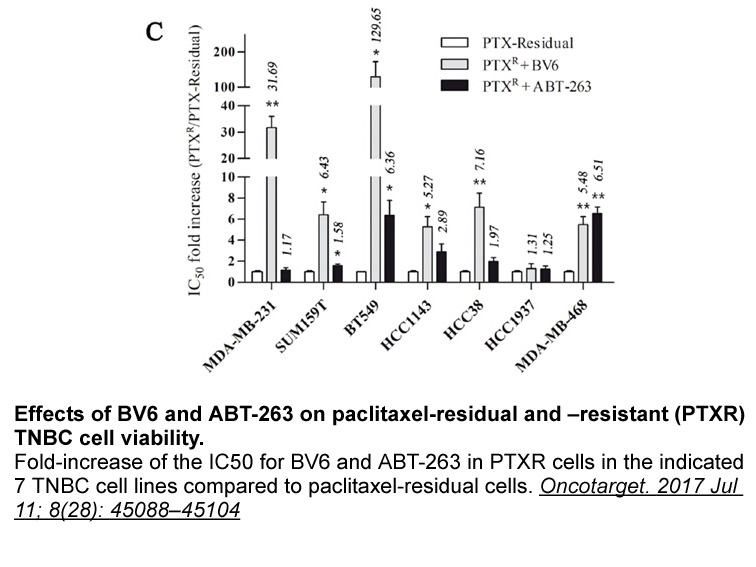
The use of FTAI can overcome the negative impact of low estrus detection efficiency, but implies effective synchrony of luteal function as well as synchronous growth and ovulation of a viable Cilomilast mg follicle. Pregnancy rates obtained with FTAI may be comparable or better than those obtained
-
Introduction Cytochrome P CYP aromatase catalyzes the conver
2024-12-10
Introduction Cytochrome P450 19 (CYP19; aromatase) catalyzes the conversion of androgens to estrogens in a three-reaction sequence, where each step depends on NADPH and O2 [[1], [2], [3]]. The first two steps are accepted to be hydroxylations of the steroid C19 methyl group, whereas the final step
8497 records 72/567 page Previous Next First page 上5页 7172737475 下5页 Last page